

Discoverthe extraordinary.
Experience the absolute best of Hadzabe with our tailored, expert-led itineraries.
What makes Hadzabe Experience unforgettable.
 Step 1
A Society Without Possessions or Hierarchy
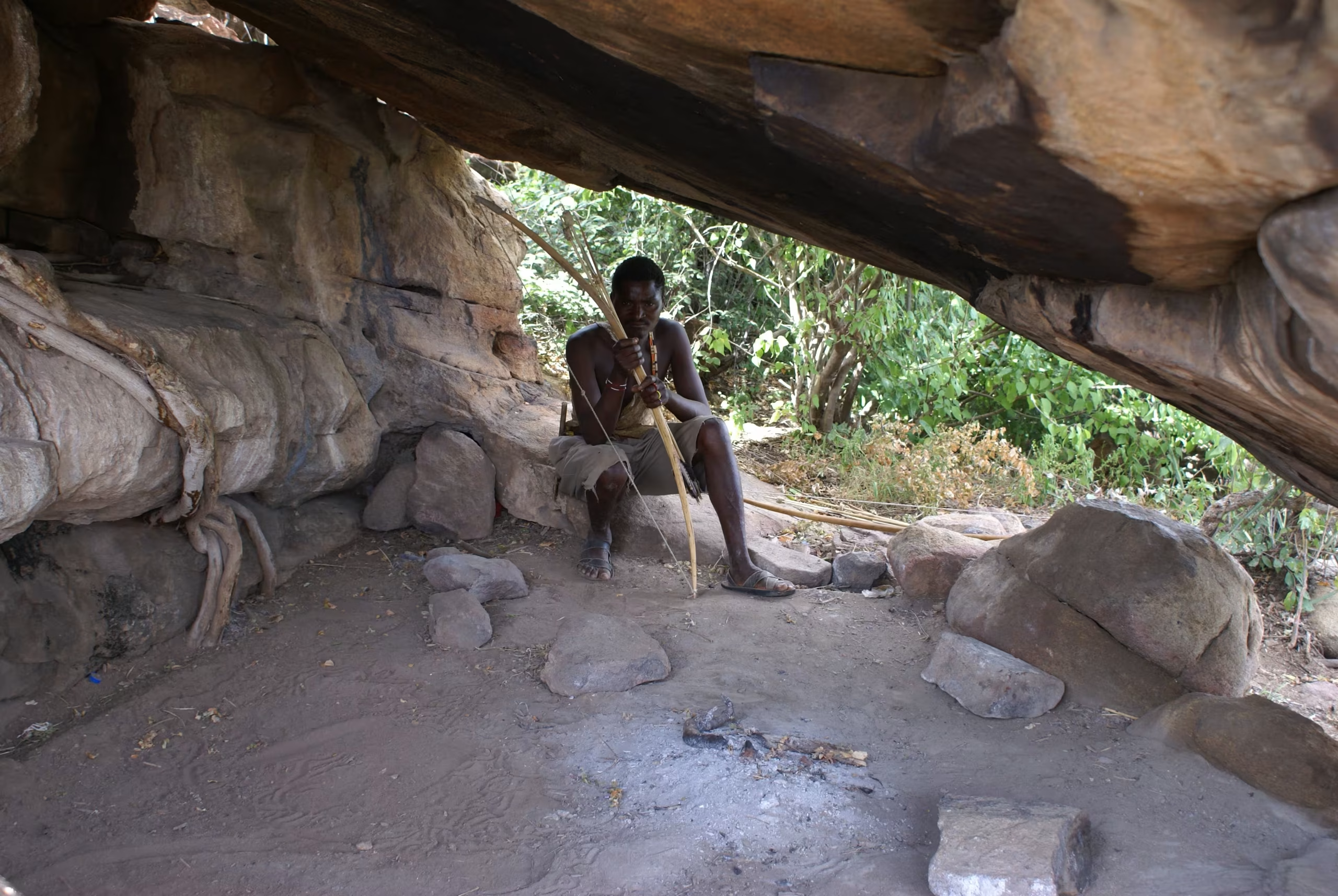
The Hadzabe population is small, estimated to be roughly between 1,000 and 1,500 individuals, with perhaps only 300 to 400 still practicing the traditional, full-time hunter-gatherer lifestyle. They live in small, highly mobile camps, numbering around 20 to 30 individuals.
Because they must be ready to move whenever the local food or water resources are depleted, they own very little. Their material culture is stripped down to the absolute essentials for survival: bows and arrows, simple digging sticks, a few cooking pots, and animal skins for warmth. They sleep under the stars, or in simple, temporary shelters made from woven branches and dried grass, often utilizing the natural protection of large baobab trees or rocky overhangs.
 Step 2
The Hunt: Following the Masters of the Bush
The absolute highlight of a visit to the Hadzabe is the opportunity to accompany the men on an early morning hunt. This is not a staged demonstration; it is a genuine, active hunt for the day's food, and visitors must be prepared to keep up.
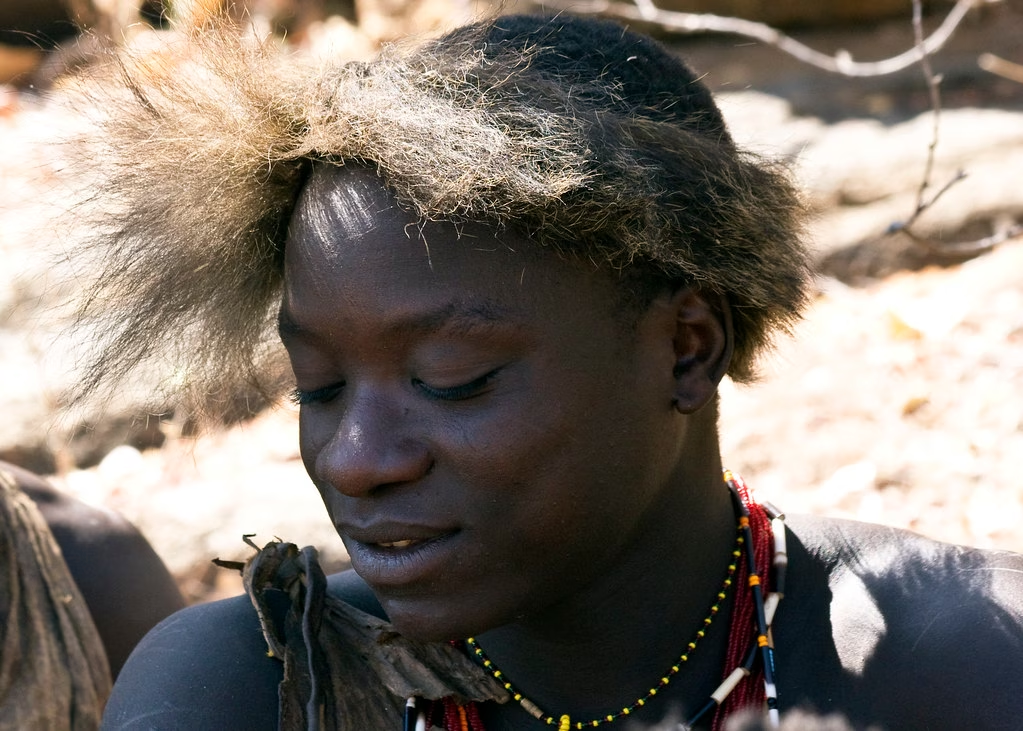
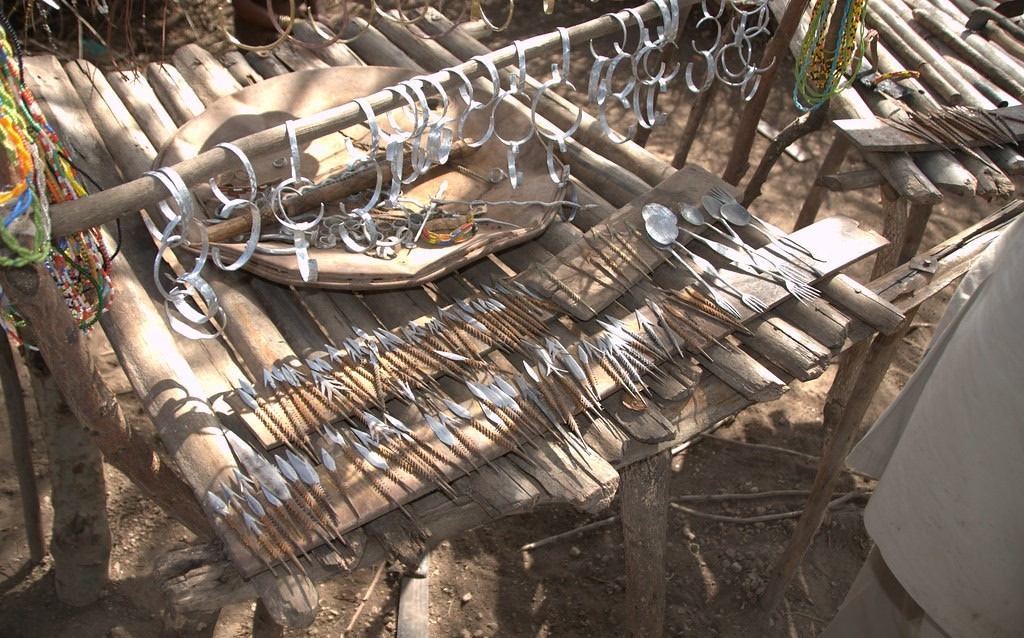
The hunt begins at dawn. The men arm themselves with their powerful, hand-crafted bows—made from local wood and strung with animal sinew or giraffe ligaments. They carry a variety of arrows: some with wooden tips for stunning small birds, others with sharp metal heads (often traded from the neighboring Datoga blacksmiths) for larger game, and crucially, arrows coated in a lethal neurotoxin derived from the desert rose plant, used for taking down large mammals like baboons or impalas.
 Step 3
Foraging and the Sweet Reward of Honey
While the men hunt, the Hadzabe women form the backbone of the community's daily caloric intake through foraging. Using simple, sharpened digging sticks, they scour the landscape for edible roots, tubers, and seasonal berries. They possess an encyclopedic knowledge of the local flora, knowing exactly which plants are nutritious, which hold water, and which are poisonous.
However, the most highly prized food in the Hadza diet, desired above all else by both men and women, is wild honey. The Hadzabe have a fascinating, symbiotic relationship with a small, seemingly unremarkable bird known as the Greater Honeyguide. The bird, knowing where a beehive is located but unable to access it, will approach a Hadza hunter, fluttering and calling to get his attention. The hunter will whistle back, following the bird through the bush until it stops near the hive (often located high in a baobab tree).
 Step 4
An Ancient Language of Clicks
Communication among the Hadzabe is as unique as their lifestyle. They speak a language known as Hadzane. For decades, linguists classified it as a Khoisan language because it features prominent "click" consonants, similar to the languages spoken by the San people of the Kalahari Desert in southern Africa. However, modern linguistic research suggests that Hadzane is an isolate—a language with no known relation to any other language on earth.
Listening to the Hadzabe converse is mesmerizing. The clicks, pops, and sudden stops create a rhythmic, staccato sound that echoes beautifully in the quiet of the bush. It is believed that the click consonants evolved specifically because they are less likely to startle prey during a hunt compared to the softer, vowelled sounds of other languages.
 Step 5
Ethical Tourism and Preservation
Visiting the Hadzabe requires sensitivity and a deep respect for their autonomy. The encroachment of agriculture, pastoralism (from groups like the Maasai and Datoga), and modern land-use policies are severely threatening their traditional hunting grounds. The Hadzabe are actively fighting to secure legal land rights to preserve their ancient way of life.
Ngomi Adventures ensures that our visits are conducted ethically. We partner with local guides who have established, trusting relationships with specific Hadzabe camps. The fees paid for these visits provide a crucial, alternative source of income for the tribe, which they can use to buy necessities or advocate for their land rights.
An invitation to reconnect with nature in its purest, most undiluted form.
The ways to experience Hadzabe Experience.
Begin your journey.
Tell us which journey feels closest and we will shape it around you — dates, pace, the kind of camps you sleep best in.