

An invitation to reconnect with nature in its purest, most undiluted form.
For the intrepid traveler, the true aficionado of African wilderness, Tanzania’s Western Circuit is the ultimate prize. Located in the extreme western reaches of the country, bordering the massive expanse of Lake Tanganyika and the Democratic Republic of Congo, this region is the most remote, least visited, and arguably the most pristine safari destination in East Africa. The logistical challenges of reaching the West—requiring expensive charter flights or grueling multi-day overland journeys—act as a natural filter, keeping the crowds at bay and preserving an environment that feels entirely untouched by the modern world.
The Western Circuit offers a safari experience that is fundamentally different from the classic savanna drives of the North or South. Here, the focus shifts from sweeping plains to dense, ancient rainforests and vast, isolated floodplains. It is the domain of our closest living relatives, the chimpanzees, and it boasts landscapes that are as beautiful as they are dramatic. A journey to the West is not a typical vacation; it is a full-blown expedition into the deep frontier, requiring a sense of adventure, a healthy budget, and a desire to see an Africa that very few people will ever witness.

The complete guide to Western Circuit Experience.
 I.
I.
Mahale Mountains National Park: The Realm of the Chimpanzee
Mahale Mountains National Park: The Realm of the Chimpanzee
The absolute crown jewel of the Western Circuit is the Mahale Mountains National Park. Rising dramatically from the crystal-clear waters of Lake Tanganyika—the longest and second-deepest freshwater lake in the world—the Mahale Mountains form a breathtaking, lush, green escarpment. There are no roads in Mahale. The park is only accessible by boat across the lake, and all exploration is done on foot.
Mahale is globally renowned as one of the best places in the world for chimpanzee trekking. The park is home to an estimated 1,000 chimpanzees, but the star attraction is the "M" group. This specific community of around 60 individuals has been continuously studied by Japanese researchers since the 1960s and is completely habituated to human presence.
Trekking for the chimps is a thrilling, unpredictable adventure. Accompanied by expert guides and trackers, you hike through the dense, humid rainforest, following the sounds of the chimps’ iconic pant-hoots echoing through the canopy. The trek can take anywhere from an hour to a strenuous half-day hike up steep, tangled slopes. But the moment you find them, the fatigue vanishes. Sitting quietly on the forest floor, watching these highly intelligent primates groom each other, play, argue, and use tools, is a profoundly emotional experience. The realization of our shared evolutionary history hits you with undeniable force when you look into a chimpanzee's eyes.
 II.
II.
Gombe Stream National Park: Jane Goodall's Legacy
Gombe Stream National Park: Jane Goodall's Legacy
Slightly further north along the shores of Lake Tanganyika lies Gombe Stream National Park. At just 52 square kilometers (20 square miles), it is Tanzania's smallest national park, but its historical and scientific significance is monumental. This is the place where, in 1960, a young Jane Goodall first began her groundbreaking research on chimpanzee behavior. It was here she made the paradigm-shifting discovery that chimpanzees make and use tools, blurring the line that had previously separated humans from the rest of the animal kingdom.
Like Mahale, Gombe is accessible only by boat from the town of Kigoma. The terrain consists of steep valleys and lush riverine forests. Trekking the chimps here feels like walking through the pages of a scientific history book. The chimpanzee communities here (most notably the Kasakela community studied by Goodall) are heavily habituated, allowing for incredibly close and intimate viewing.
Gombe is steeper and more rugged than Mahale, but it offers a deeply concentrated and historically rich experience. Aside from the chimps, you can spot olive baboons, red-tailed monkeys, and hike to the beautiful Kakombe Waterfall. Visiting Gombe is a pilgrimage for anyone passionate about primatology and conservation history.
An invitation to reconnect with nature in its purest, most undiluted form.
 III.
III.
Katavi National Park: The Untamed Wilderness
Katavi National Park: The Untamed Wilderness
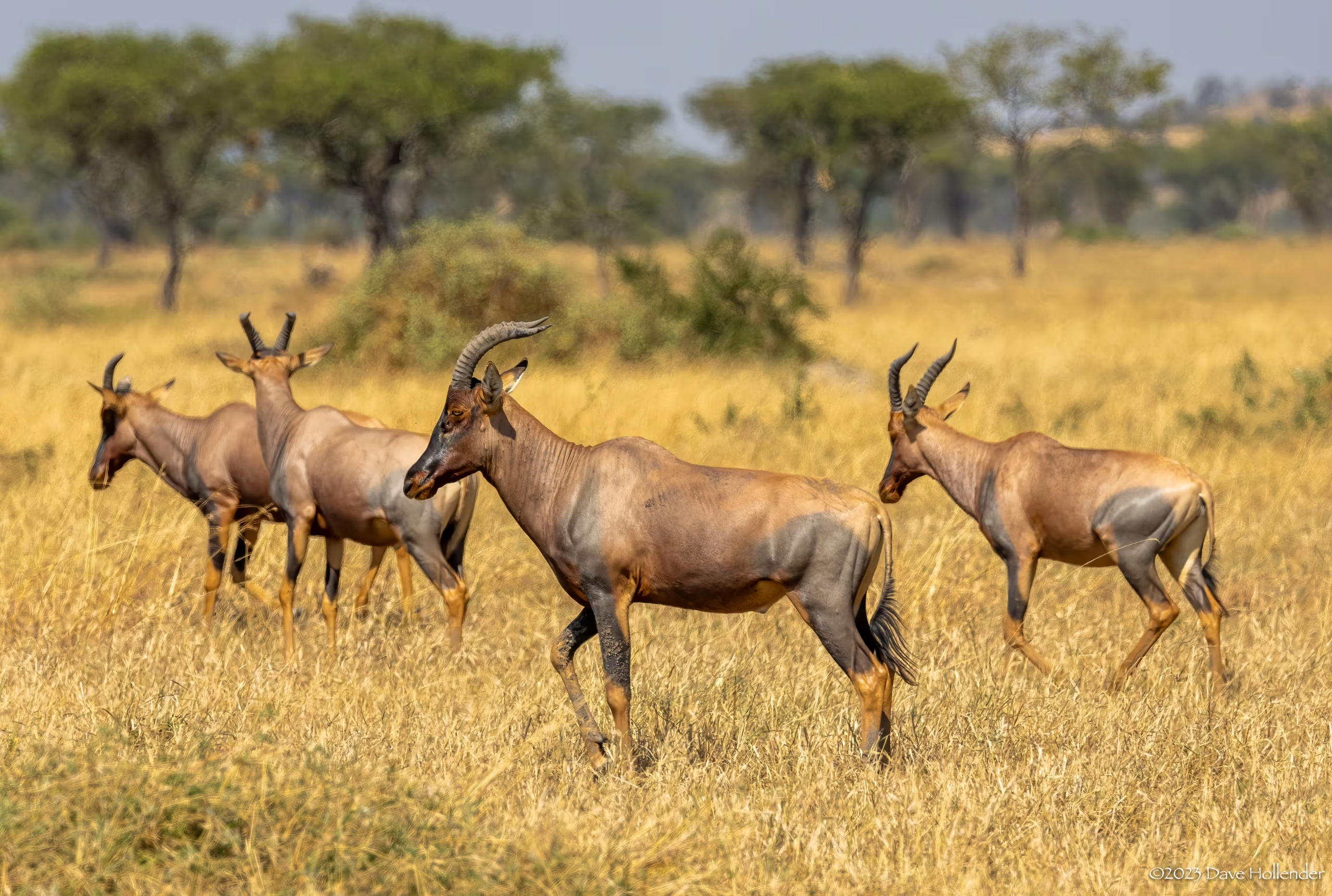
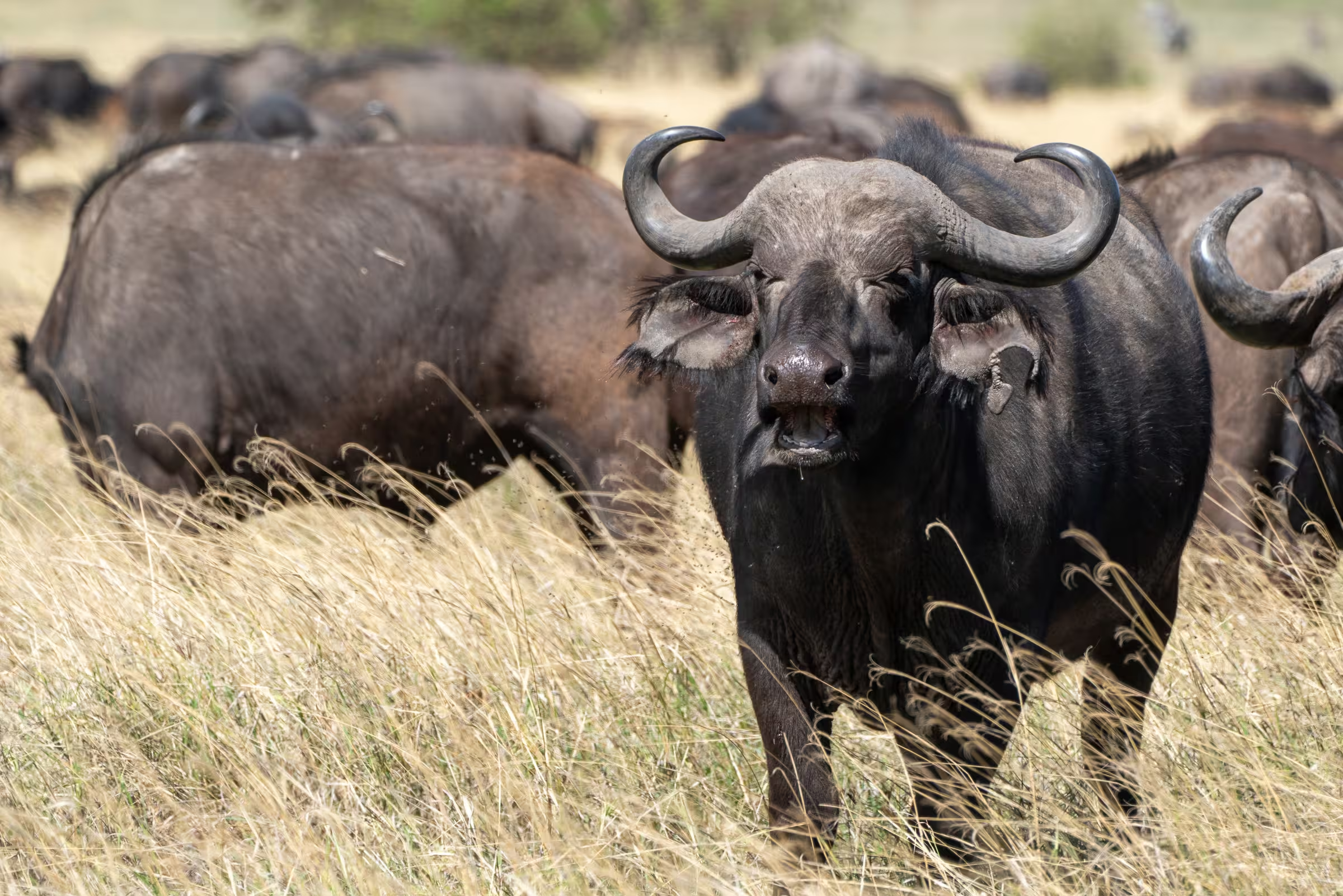
While Mahale and Gombe are famous for their forests and primates, Katavi National Park represents the ultimate, raw savanna wilderness. Located inland from Lake Tanganyika, Katavi is massive (4,471 square kilometers) and sees fewer visitors in a year than the Serengeti sees in a day. It is an uncompromising, rugged landscape that changes violently with the seasons.
During the wet season, the vast Katuma River and associated lakes flood, turning the park into a lush marshland attracting incredible birdlife. However, Katavi truly reveals its dramatic nature during the dry season (June to November). As the waters recede, the Katuma River is reduced to a narrow, muddy trickle. This forces the wildlife to congregate in staggering numbers.
Katavi is famous for having some of the highest densities of hippos and crocodiles in Africa. As the waterholes dry up, hundreds of hippos are forced into tiny, shrinking pools. The resulting stress leads to fierce, bloody territorial battles among the massive males. The crocodiles, meanwhile, estivate (a form of summer hibernation) in caves dug into the muddy riverbanks, an incredibly bizarre sight.
 IV.
IV.
The Logistics of the Deep West
The Logistics of the Deep West
Because of its extreme remoteness, the Western Circuit demands careful planning and a larger budget. The towns of Kigoma (for Gombe) and Mpanda (for Katavi) are the logistical hubs, but driving there from Arusha or Dar es Salaam takes multiple days over extremely rough roads.
The most practical and luxurious way to experience the West is via scheduled, twice-weekly light aircraft flights that connect Arusha or Ruaha directly to the dirt airstrips in Katavi and Mahale. Ngomi Adventures strongly recommends combining Katavi and Mahale into a single itinerary. This creates the ultimate "surf and turf" safari: spending three or four nights experiencing the brutal, raw savanna drama of Katavi, followed by a short flight to the shores of Lake Tanganyika to spend four nights trekking chimps and relaxing on the beach in the lush forests of Mahale.
 V.
V.
Accommodation: Barefoot Luxury and Classic Canvas
Accommodation: Barefoot Luxury and Classic Canvas
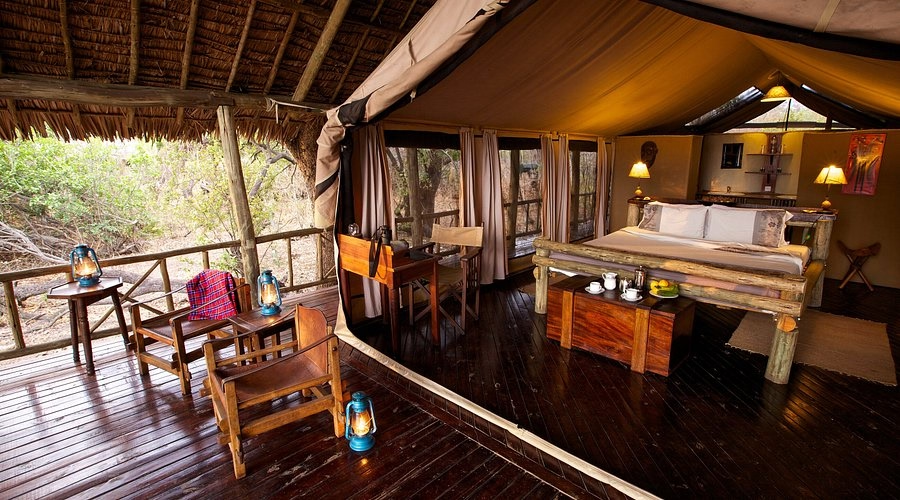
The accommodations in the Western Circuit reflect the exclusivity of the region. There are no large hotels here. In Katavi, we partner with classic, seasonal tented camps. These camps offer genuine luxury—excellent food, comfortable beds, and hot bucket showers—but they are entirely unfenced, meaning the wildlife wanders freely through the camp.
In Mahale, the lodges are architectural marvels, built from sustainable timber and old dhow boats, tucked seamlessly into the forest edge along the pristine beach. They offer a unique "barefoot luxury" experience; shoes are discarded upon arrival, and the days are spent swimming, fishing for cichlids in the lake, and eating fresh, exquisite meals on the sand.
A safari to the Western Circuit is not an easy trip, but it is deeply rewarding. It is a journey for those who want to push the boundaries, to see the rarest of sights, and to experience the raw, unpolished, and breathtaking reality of an Africa that has remained unchanged by the modern world. It is the adventure of a lifetime.
The ways to experience Western Circuit Experience.
Begin your journey.
Tell us which journey feels closest and we will shape it around you — dates, pace, the kind of camps you sleep best in.