

Discoverthe extraordinary.
Experience the absolute best of Bird Watching with our tailored, expert-led itineraries.
What makes Bird Watching Experience unforgettable.
 Step 1
Diverse Habitats Produce Diverse Species
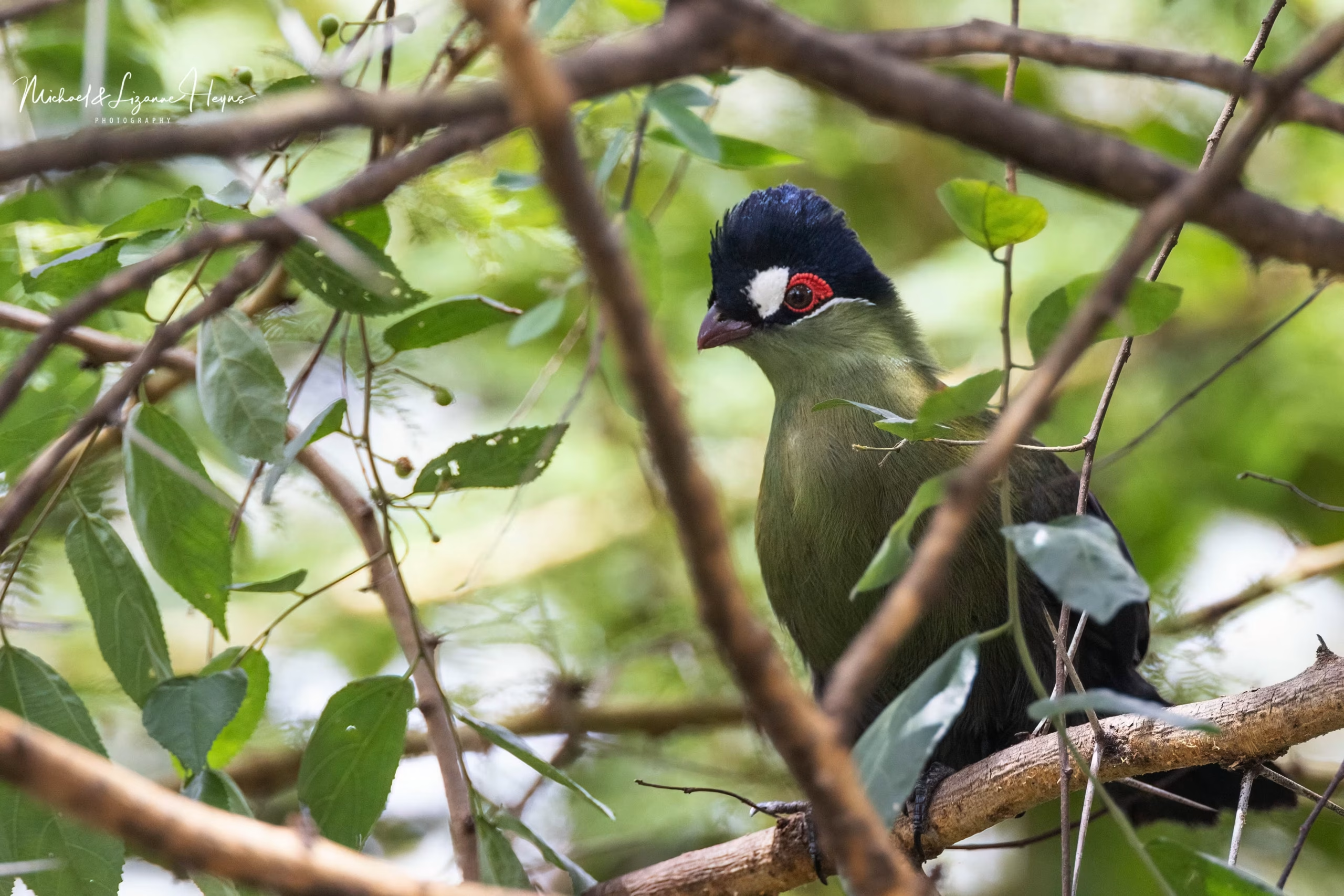
The staggering number of bird species in Tanzania is a direct result of the country's incredible topographical and ecological diversity. Within a relatively short driving distance, you can transition through entirely different climate zones, each supporting its own unique avian community.
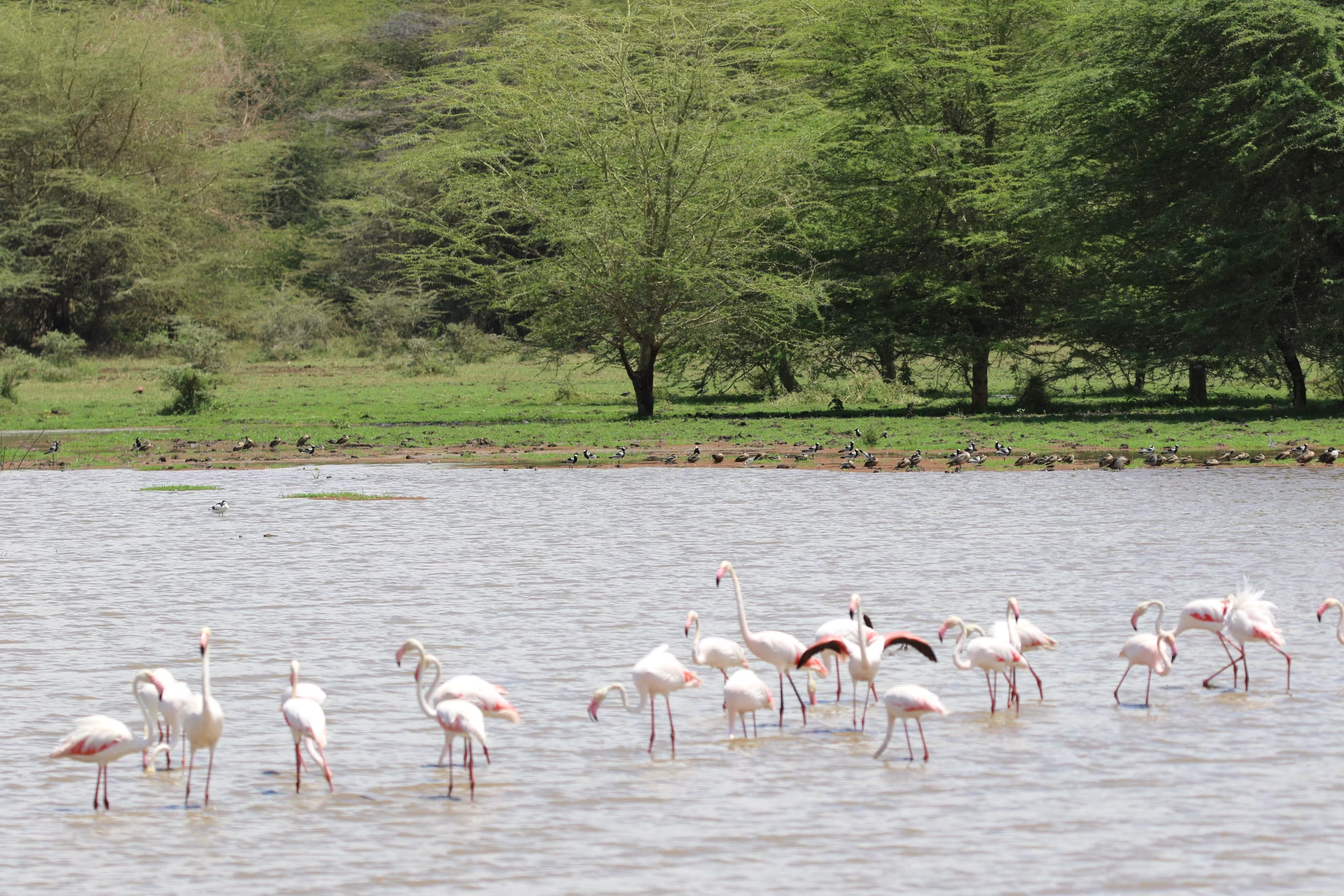
The Alkaline Lakes of the Rift Valley: Lakes such as Natron, Manyara, and Eyasi are famous for their massive, shimmering flocks of flamingos. But these harsh, alkaline environments also support an array of specialized waders, pelicans, avocets, and storks.
 Step 2
The Importance of the Specialized Birding Guide
Just as a standard safari requires a guide who can track a leopard, a successful bird watching safari absolutely depends on an expert ornithological guide. Spotting a small, camouflaged bird in dense brush requires a totally different skill set than spotting a herd of elephants.
Ngomi Adventures employs guides who specialize specifically in birding. Their knowledge is encyclopedic. They do not just identify a bird by sight; they can identify hundreds of species purely by their call. A great birding guide will stop the vehicle because they heard the specific trill of a rare warbler hidden in the thicket.
 Step 3
Endemics and Migrants
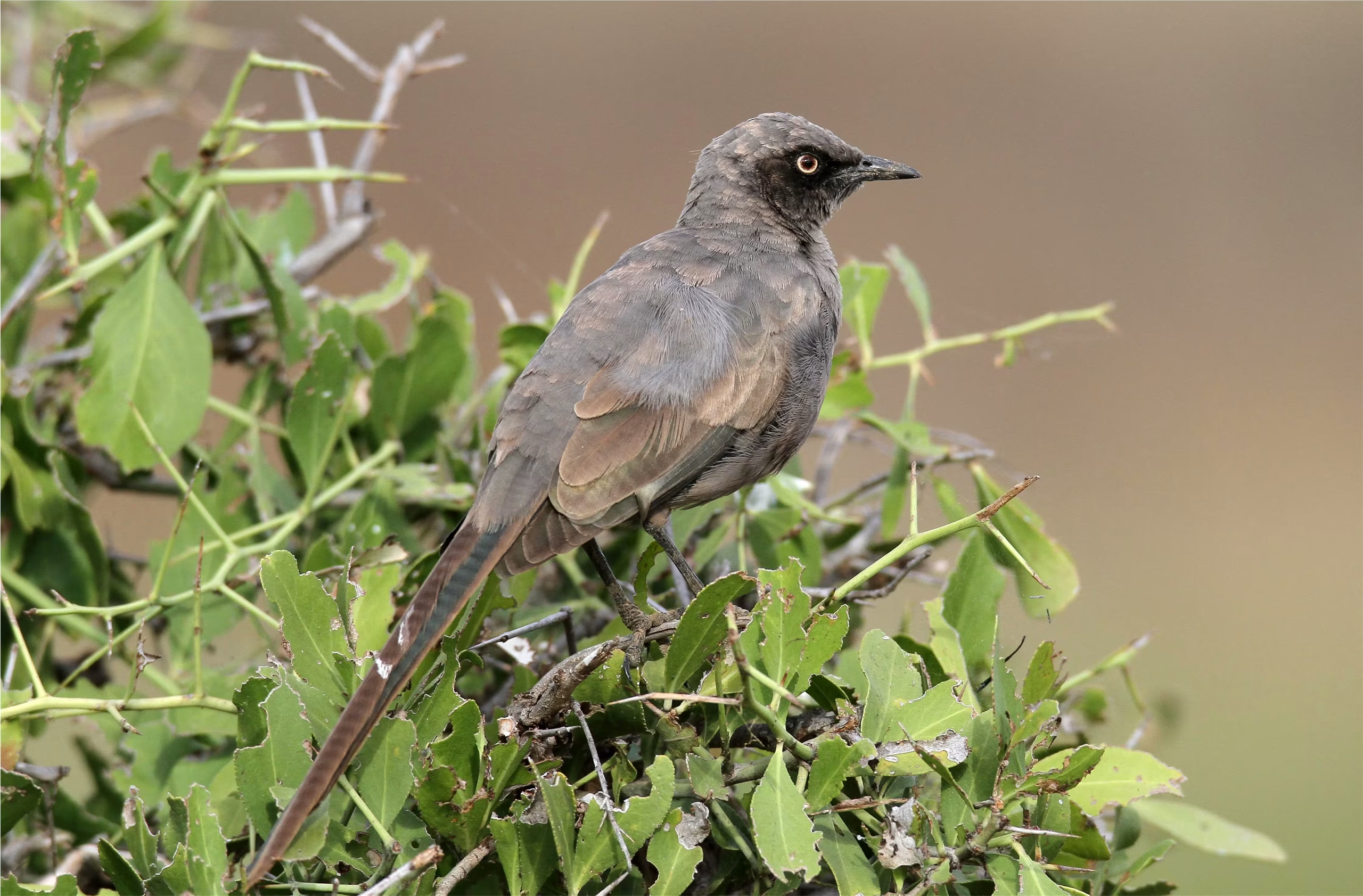
One of the major draws for serious birders visiting Tanzania is the presence of endemic species—birds that are found nowhere else on earth. The most famous example is the Ashy Starling, which is restricted entirely to the dry acacia woodlands of Tanzania, most easily spotted in Tarangire National Park. Another highly sought-after endemic is the Rufous-tailed Weaver, also found in the northern circuits. The Eastern Arc Mountains in the south, such as the Udzungwa Mountains, are often referred to as the "Galapagos of Africa" due to their high concentration of endemic forest bird species.
In addition to the resident populations, Tanzania’s birdlife is dramatically swelled by the arrival of Palaearctic migrants. Between November and April, millions of birds escape the harsh Northern Hemisphere winter by migrating to East Africa. During this time, the sheer volume of birds in the parks is staggering. You will find European rollers, white storks, various swallows, and a multitude of raptors, including the Steppe eagle and the Montagu's harrier, adding an entirely new dimension to the birding experience.
 Step 4
Equipment and Logistics for the Birder
A specialized birding safari requires specific logistical considerations.
The Vehicle: While standard safaris emphasize the pop-up roof, birders often spend a lot of time shooting out of the windows to get eye-level shots of smaller species in the brush. Our customized vehicles feature large, unobstructed windows and provide plenty of space for setting up heavy tripods or resting long lenses on beanbags.
 Step 5
Crafting Your Birding Itinerary
While excellent birding can be had anywhere in Tanzania, an itinerary focused specifically on ornithology requires strategic planning to cover the maximum number of habitats.
A classic Northern Circuit birding tour usually begins in Arusha National Park for the montane forest and alkaline lake species. It then moves to Tarangire National Park, which is arguably the best single park for bird diversity (over 550 species) due to its mix of swamps, riverine forest, and dry acacia woodland. The Ngorongoro Crater offers excellent highland species and water birds, while the Serengeti provides the classic savanna species.
An invitation to reconnect with nature in its purest, most undiluted form.
The ways to experience Bird Watching Experience.
Begin your journey.
Tell us which journey feels closest and we will shape it around you — dates, pace, the kind of camps you sleep best in.