

Discoverthe extraordinary.
Experience the absolute best of Night Drives with our tailored, expert-led itineraries.
What makes Night Drives Experience unforgettable.
 Step 1
The Mechanics of the Night Drive
Because driving at night carries inherent risks and requires specialized skills to avoid disturbing the wildlife, Night Drives are strictly regulated in Tanzania. They are not permitted inside the major national parks like the Serengeti or Tarangire. Instead, they are exclusively conducted in designated private reserves, conservation areas bordering the parks, or specific parks where special permissions have been granted (such as Lake Manyara National Park or certain areas of the southern circuit like Nyerere National Park).
A Night Drive typically begins after dinner at your lodge. You set out in a specially equipped 4x4 vehicle. Unlike daytime drives where everyone searches the horizon, the success of a night drive relies heavily on a specialized "spotter." This crew member sits either on a specially mounted seat on the front of the vehicle or stands through the pop-up roof, wielding a powerful, high-intensity spotlight.
 Step 2
The Shift in Power: Predators on the Prowl
The primary motivation for booking a Night Drive is the opportunity to see predators in action. During the heat of the day, lions and leopards are notoriously lethargic, often sleeping for up to 20 hours to conserve energy. When the sun goes down and the temperature drops, they become entirely different animals. They are the undisputed masters of the dark.
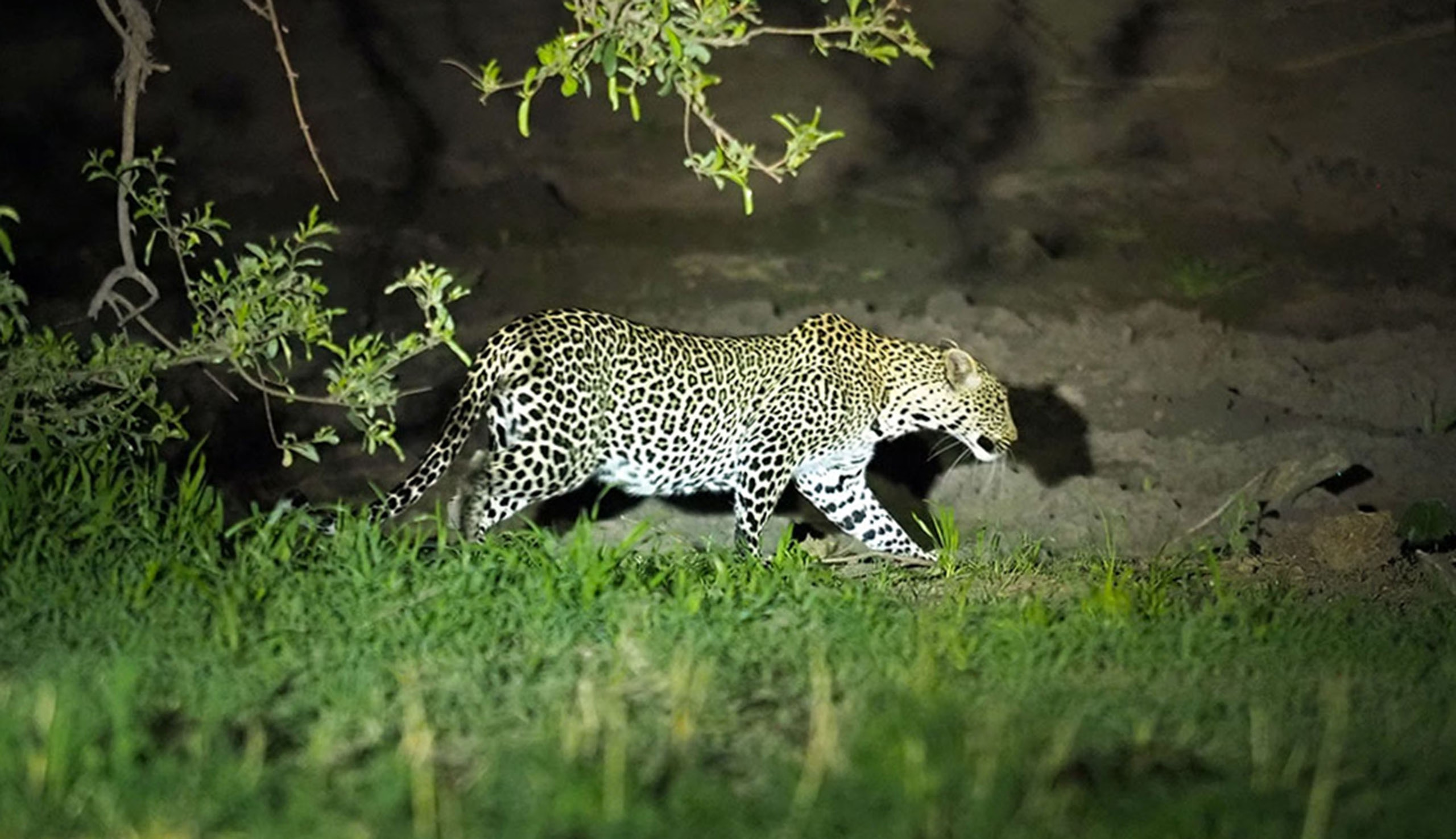
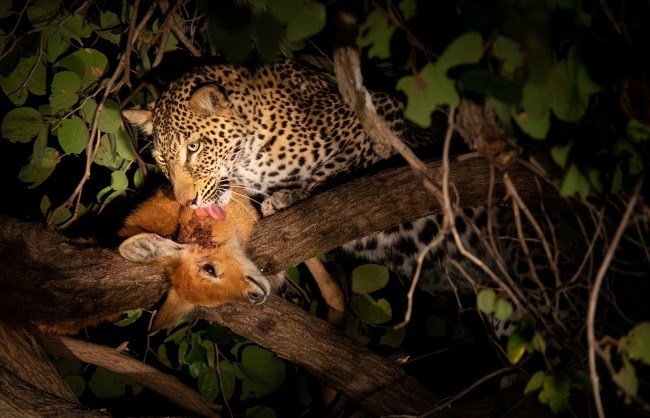
A Night Drive offers the best possible chance to witness a hunt. The darkness provides the cover these ambush predators require. You might follow a pride of lions as they silently stalk a herd of zebra, using the shadows to get within striking distance. Or, you might catch the elusive leopard descending from its daytime resting place in an acacia tree to begin its solitary patrol.
 Step 3
The Bizarre and Beautiful Nocturnal Cast
While the big cats are the headline act, the Night Drive also unveils a fascinating cast of smaller, purely nocturnal creatures that are completely invisible during standard daylight safaris. These are the strange, the elusive, and the surprisingly beautiful inhabitants of the African night.
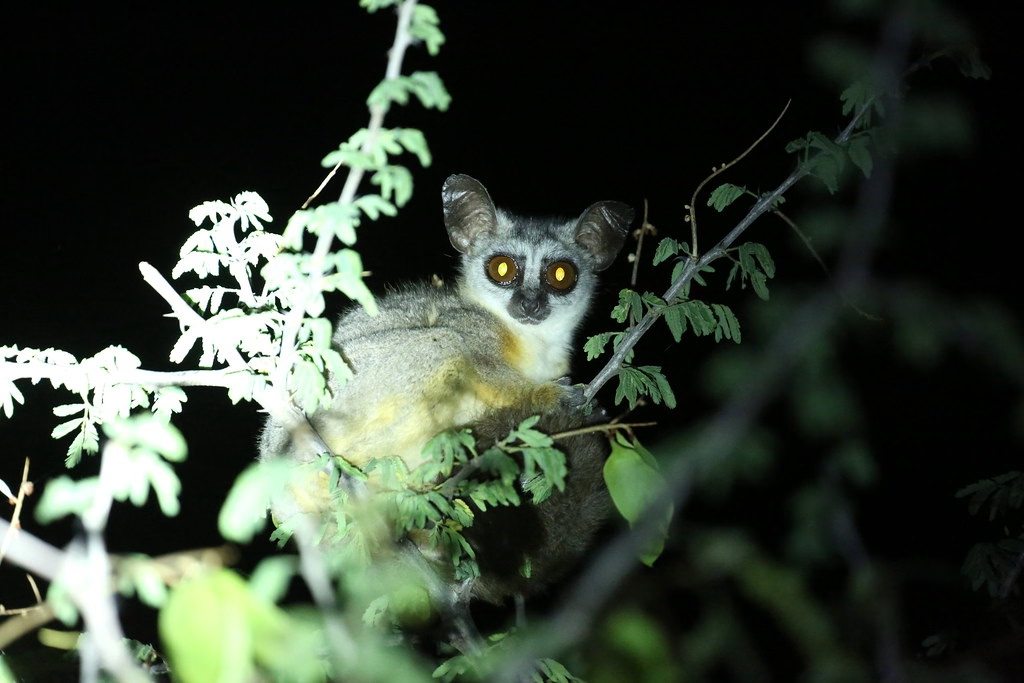
The Bushbaby (Galago): These tiny, highly agile primates are a common sight on night drives. With their massive, saucer-like eyes adapted for night vision and their incredible leaping ability, they bound through the acacia branches like acrobats.
Step 4
The Atmosphere and the Challenge
It is important to manage expectations regarding Night Drives. Photography, for instance, is incredibly challenging. Without professional flash equipment and a deep understanding of low-light settings, capturing clear images of moving animals in the dark is difficult. A Night Drive is more about being present in the moment, absorbing the atmosphere, and experiencing the thrill of the unknown.
The environment feels intimately close at night. The beam of the spotlight creates a small tunnel of visibility, meaning an animal can appear out of the darkness mere feet from the vehicle instantly. The sudden materialization of a massive bull elephant standing silently by the side of the road in the pitch black is a heart-stopping reminder of the wildness of your surroundings.
 Step 5
Where to Experience the Night
Because Night Drives are restricted, Ngomi Adventures seamlessly integrates them into your itinerary by selecting specific accommodations that have the necessary permissions.
If you are traveling the Northern Circuit, we often arrange night drives in the private concessions bordering Tarangire National Park or within the boundaries of Lake Manyara National Park (one of the few national parks to permit the activity). For those exploring the Southern Circuit, the vast, less-regulated areas around Nyerere National Park and Ruaha offer excellent opportunities.
An invitation to reconnect with nature in its purest, most undiluted form.
The ways to experience Night Drives Experience.
Begin your journey.
Tell us which journey feels closest and we will shape it around you — dates, pace, the kind of camps you sleep best in.