

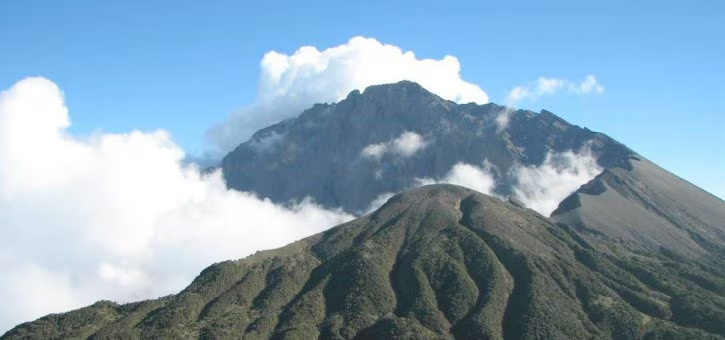
A rugged, intense climb that many consider more thrilling and visually dramatic than Kilimanjaro itself.
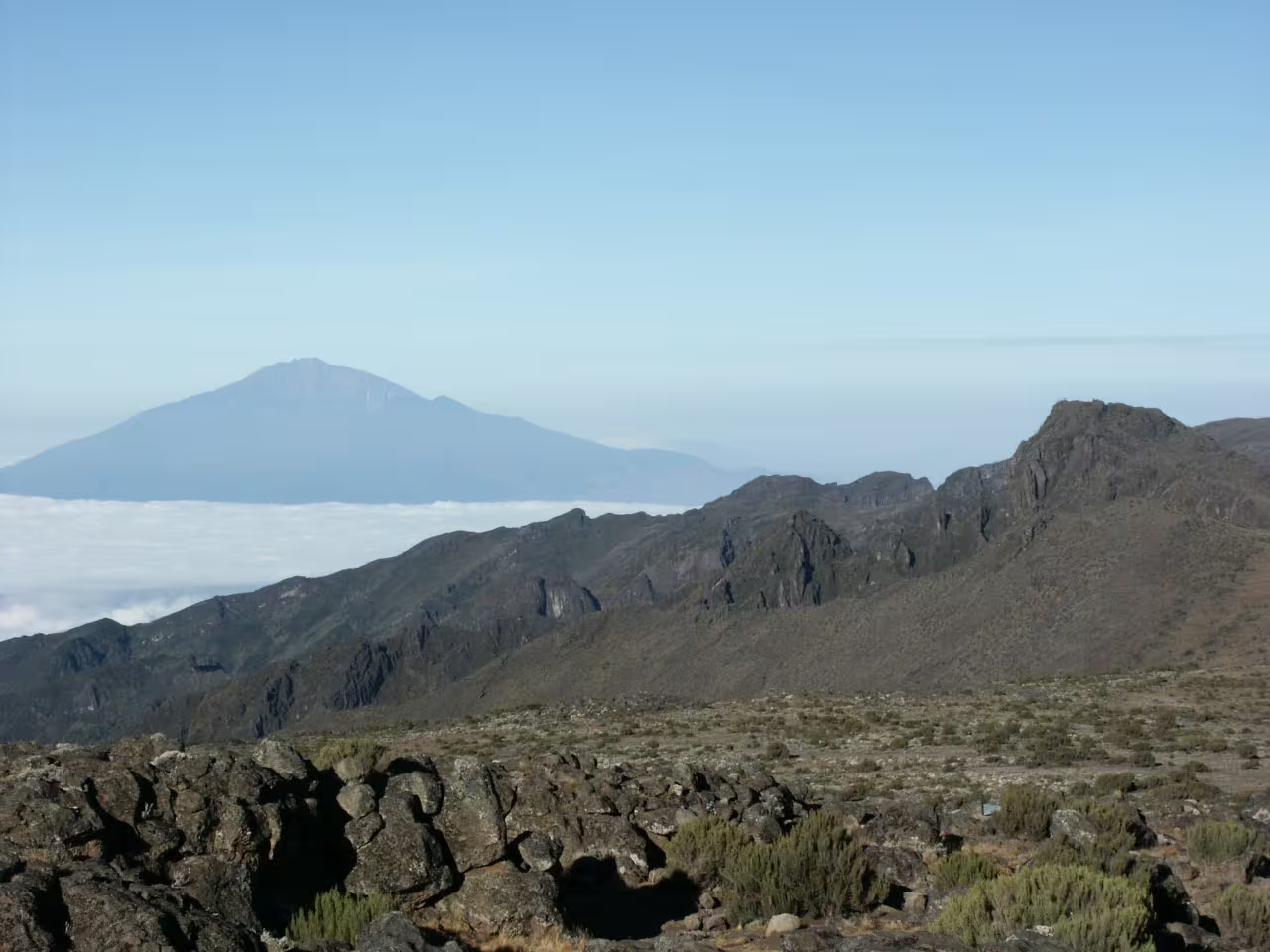
Mount Meru is the dramatic, jagged centerpiece of Arusha National Park and the second-highest mountain in Tanzania, standing proudly at 4,562 meters (14,967 feet). For decades, Meru has suffered from a classic case of middle-child syndrome, frequently overshadowed by the immense global fame and towering presence of its neighbor, Mount Kilimanjaro, which lies just 70 kilometers to the east. However, to view Mount Meru simply as a "warm-up" climb for Kilimanjaro is a massive understatement of its true value. Meru is a spectacular, steep, and highly rewarding stratovolcano that offers a profoundly different and often more intimate trekking experience than the Roof of Africa.
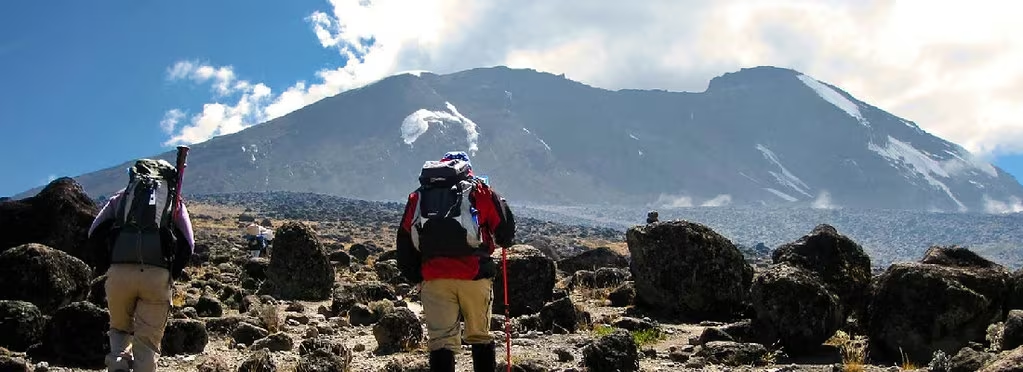
Unlike the relatively gradual, sprawling slopes of Kilimanjaro, Mount Meru is an incredibly steep and rugged mountain. It is characterized by a massive, horseshoe-shaped crater that was formed when the eastern wall of the volcano collapsed in a catastrophic eruption millennia ago. This geological violence created a sheer, 1,500-meter (5,000-foot) cliff face within the caldera, making it one of the tallest cliffs in the world. Trekking Meru involves navigating lush rainforests, scrambling along narrow, vertigo-inducing ridges, and ultimately standing on the edge of this massive, plunging crater. For many experienced mountaineers, the technical challenge and visual drama of Meru actually surpass the popular routes on Kilimanjaro.
The complete guide to Mount Meru Trekking.
 I.
I.
A Trek Through Vibrant Ecosystems
A Trek Through Vibrant Ecosystems
Because Mount Meru is located entirely within the boundaries of Arusha National Park, the lower slopes of the mountain offer something that Kilimanjaro cannot: a genuine, walking wildlife safari. The trek begins at the Momella Gate (1,500m) and immediately plunges into a dense, ancient, and incredibly lush montane rainforest.
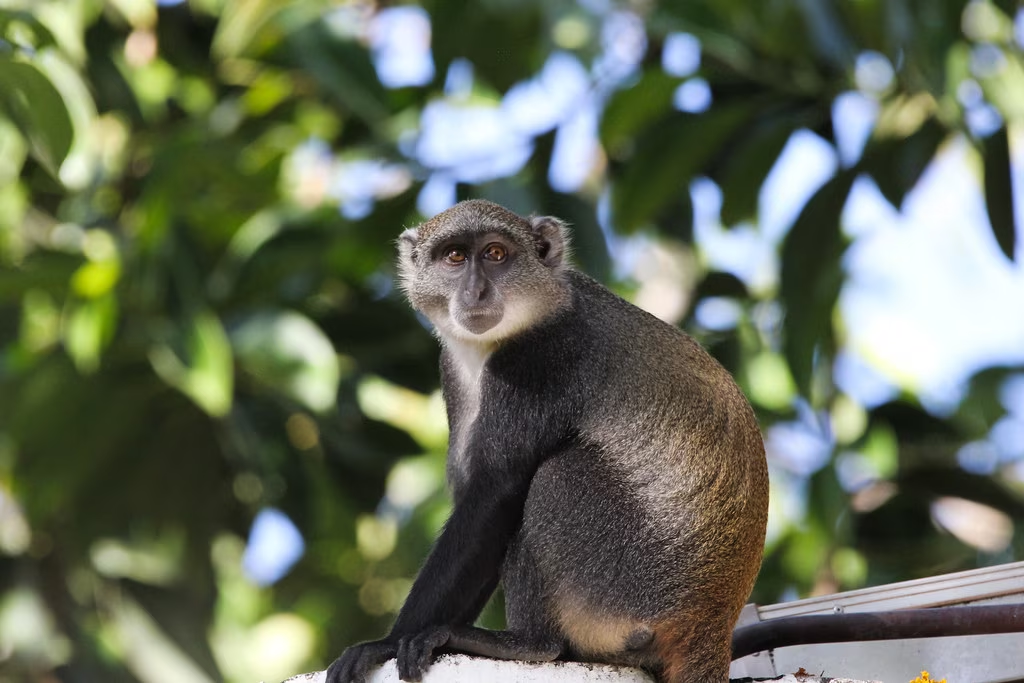
This lower forest is teeming with wildlife. Because of the high probability of encountering large animals, it is mandatory to be accompanied by an armed park ranger for the entire duration of the trek. As you hike through the dappled light of the forest, draped in thick Spanish moss, you are highly likely to spot massive herds of Cape buffalo grazing in the clearings. Giraffes, warthogs, and the beautiful, elusive bushbuck are common sights. The canopy above is alive with the calls of blue monkeys and the striking black-and-white colobus monkeys.
As you ascend past the 2,500-meter mark, the dense rainforest abruptly gives way to heath and moorland. The air becomes noticeably thinner and cooler. This zone is characterized by giant heather, vibrant wildflowers, and the surreal, towering giant groundsels (Dendrosenecio). The views open up significantly, offering panoramic vistas back down to the Momela Lakes and out across the Maasai Steppe. Above 3,500 meters, the vegetation becomes sparse, transitioning into an alpine desert of volcanic rock and ash as you approach the final base camp.
 II.
II.
The Standard Itinerary: A Three to Four Day Challenge
The Standard Itinerary: A Three to Four Day Challenge
Trekking Mount Meru is typically accomplished in either three or four days, utilizing a single, well-established route that ascends and descends via the same path (with a slight variation on the descent through the forest). Unlike Kilimanjaro, where you camp in tents, the accommodation on Meru consists of designated, rustic wooden mountain huts: Miriakamba Hut (2,500m) and Saddle Hut (3,500m).
Day 1: The trek begins with a relatively gentle, incredibly scenic hike through the forest to Miriakamba Hut. This day is focused entirely on wildlife viewing and acclimatizing to the humid forest environment.
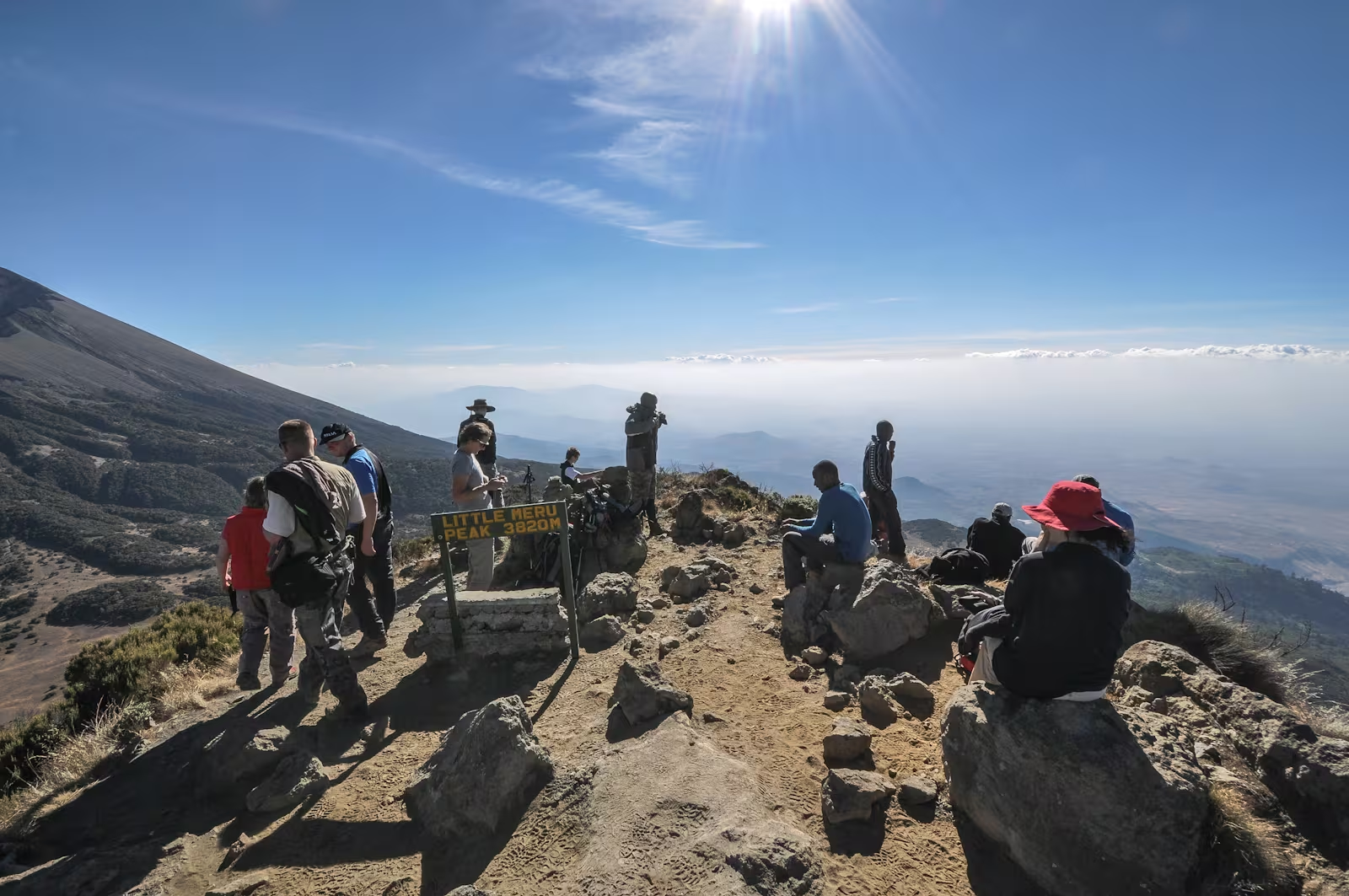
Day 2: The trail becomes significantly steeper as you climb out of the forest and into the heath zone, making your way to Saddle Hut. The "saddle" refers to the broad, flat ridge between the main summit of Meru and the smaller peak known as Little Meru. Many trekkers opt for a short, late-afternoon acclimatization hike up Little Meru (3,801m) to catch the sunset and help their bodies adjust to the altitude before the summit push.
A rugged, intense climb that many consider more thrilling and visually dramatic than Kilimanjaro itself.
 III.
III.
Acclimatization and Physical Preparation
Acclimatization and Physical Preparation
While Mount Meru is significantly lower than Kilimanjaro, altitude sickness remains a very real and present danger. Because the ascent profile is so steep—you gain over 3,000 meters in elevation in just two and a half days—the body has far less time to acclimatize than on a 7-day Kilimanjaro route. Headaches, nausea, and fatigue are common on summit night.
Physical preparation is essential. The steepness of the trail, particularly the descent, puts a tremendous amount of strain on the knees and quadriceps. Using trekking poles is highly recommended. You must be in excellent cardiovascular shape and have experience hiking on steep, uneven terrain.
For those planning to climb both peaks, Meru serves as the ultimate acclimatization tool. By completing the 3- or 4-day Meru trek, your body builds crucial red blood cells and adapts to the thin air. After a day or two of rest, you can then begin your Kilimanjaro climb already fully acclimatized to 4,500 meters, dramatically increasing your chances of reaching the Roof of Africa safely and comfortably.
 IV.
IV.
Guiding and Mountain Logistics
Guiding and Mountain Logistics
Trekking Mount Meru with Ngomi Adventures guarantees a premium, fully supported expedition. While the park provides the armed ranger for wildlife protection, our dedicated team of expert mountain guides, chefs, and porters are responsible for your success and comfort.
Our guides are medically trained and intimately familiar with the symptoms of Acute Mountain Sickness (AMS). They will set the pace, ensuring you do not ascend too quickly. Our porters carry all your heavy gear, meaning you only need to carry a small daypack with your water and layers. At the huts, our chefs prepare hot, high-calorie meals designed specifically to aid digestion at altitude and keep your energy levels high for the steep climbs ahead.
 V.
V.
Why Choose Mount Meru?
Why Choose Mount Meru?
Mount Meru is the perfect destination for the trekker who wants a serious physical challenge without the heavy crowds and high price tag associated with Kilimanjaro. It is a more rugged, technical, and arguably more beautiful climb, offering the unique combination of a big-game walking safari and a high-altitude alpine ascent in a single trip.
Whether used as a strategic warm-up for its massive neighbor or climbed as the primary goal of your Tanzanian adventure, standing on the narrow, precarious rim of Socialist Peak, looking down into the plunging crater and out toward the sunrise, is an accomplishment that commands immense respect. It is a mountain that demands physical effort but rewards you with some of the most spectacular, unspoiled, and dramatic scenery on the African continent.
The ways to experience Mount Meru Trekking.
Begin your journey.
Tell us which journey feels closest and we will shape it around you — dates, pace, the kind of camps you sleep best in.