

Discoverthe extraordinary.
Experience the absolute best of Boat Safaris with our tailored, expert-led itineraries.
What makes Boat Safaris Experience unforgettable.
 Step 1
The Rufiji River: The Heart of Nyerere National Park
The undisputed capital of the Tanzanian boat safari is Nyerere National Park (formerly the Selous Game Reserve) in the Southern Circuit. The park is bisected by the mighty Rufiji River, a massive, meandering waterway that creates a complex network of channels, swamps, and oxbow lakes. Unlike the dry parks of the north, the ecology of Nyerere is fundamentally defined by this river system.
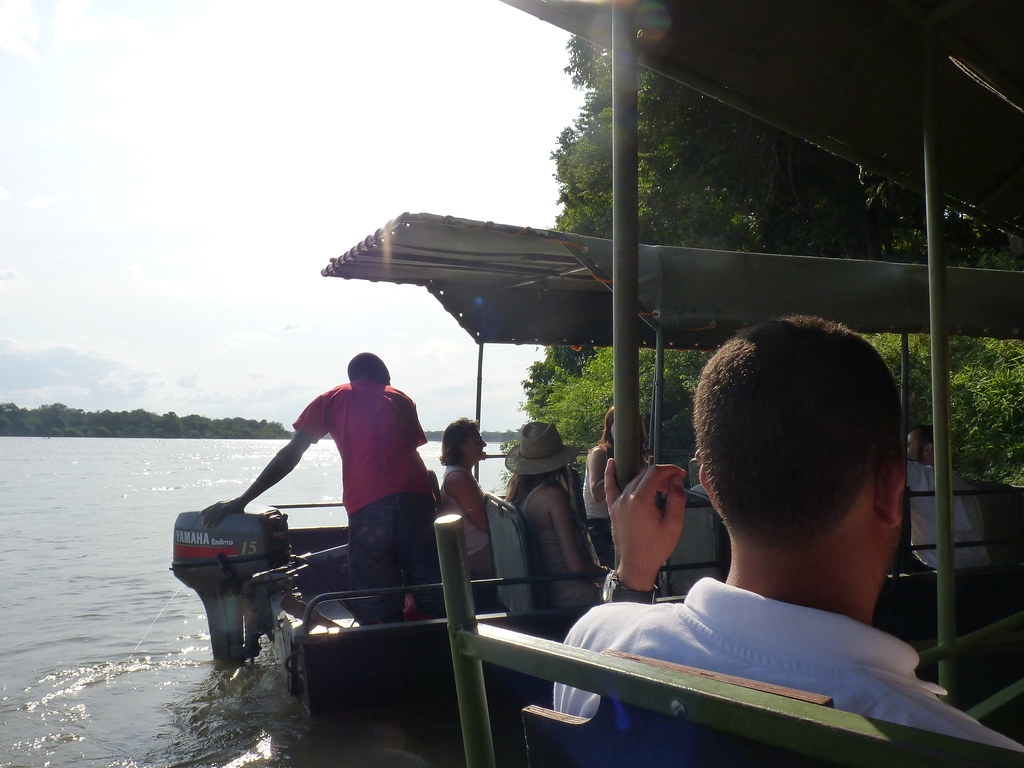
A boat safari on the Rufiji is an essential part of any southern itinerary. Operating in flat-bottomed, motorized aluminum or fiberglass boats equipped with comfortable seating and sun canopies, you set out onto the wide, brown waters. The immediate highlight is the hippopotamus. The Rufiji boasts one of the largest hippo populations in Africa. You will navigate past massive pods—sometimes numbering in the dozens—wallowing in the shallows, yawning aggressively to display their formidable tusks, and constantly jostling for position. The experienced boat guides know exactly how to read the water to approach these massive creatures safely.
Step 2
Eye-Level Encounters and The Thirsty Herds
The beauty of a boat safari lies in the unique perspective it provides. When you are in a boat, you are essentially at eye level with the water's surface. This allows for spectacular, intimate photography.
The riverbanks serve as a constant theater of activity. Throughout the day, but particularly in the dry season, the terrestrial wildlife must come down to the water to drink. From the safety of the boat, you can quietly observe massive herds of elephants gathering at the water's edge. Watching young elephants playfully splashing and wrestling in the water, or a matriarch demonstrating how to use her trunk as a snorkel to cross a deep channel, is mesmerizing.
 Step 3
An Ornithological Paradise
If you are a bird enthusiast, a boat safari is arguably the most rewarding activity you can undertake in Tanzania. The riparian environments (the interface between land and a river or stream) are the most biologically diverse habitats for avian life.
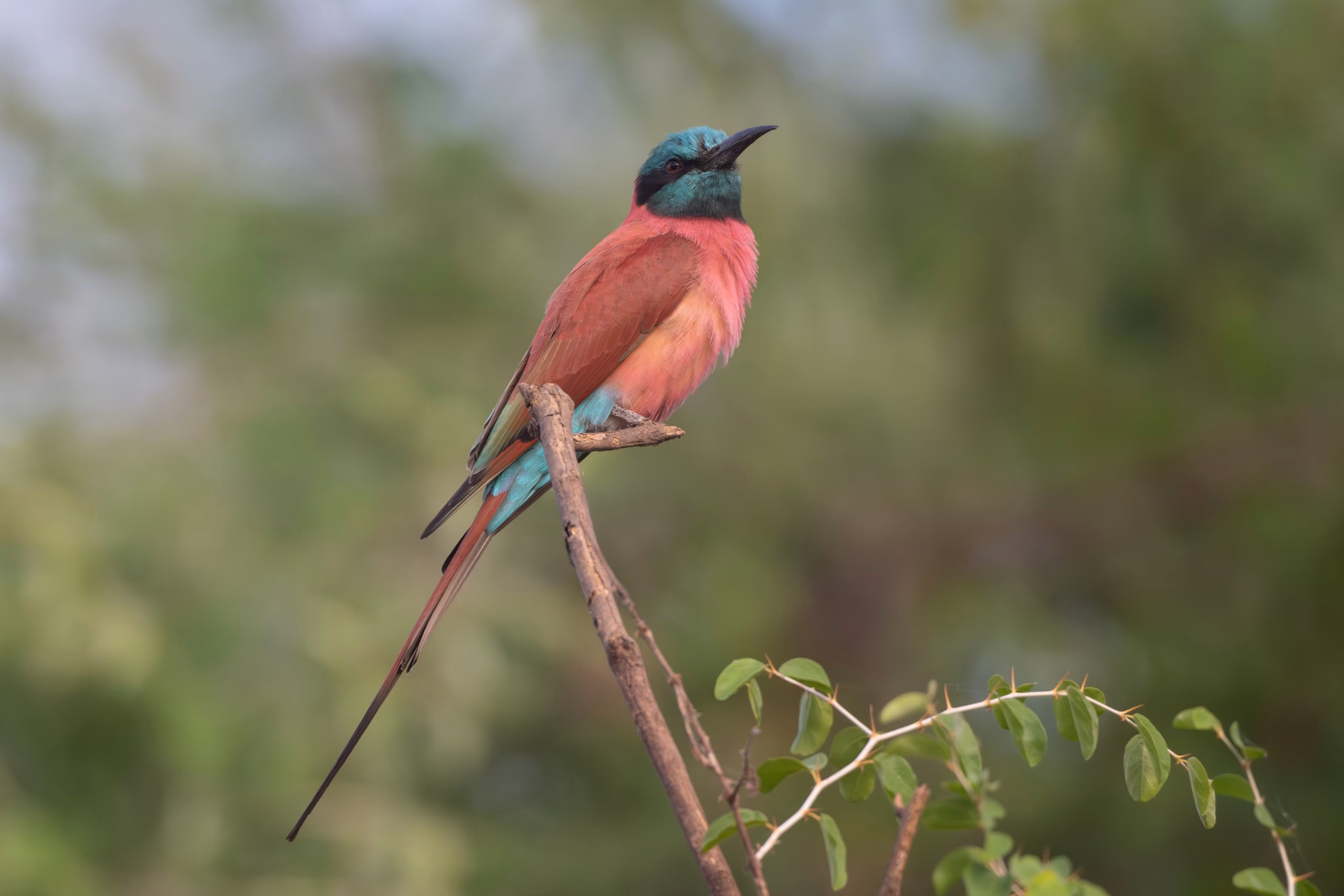
On the Rufiji River, the steep, sandy banks are perforated with thousands of small holes, the nesting sites of the brilliantly colored carmine bee-eaters. Watching a flock of hundreds of these vibrant pink and blue birds swoop and dive over the water catching insects is a dazzling spectacle. The waterways are also home to the iconic African fish eagle; hearing its haunting, piercing call echo across the water is the quintessential sound of Africa.
 Step 4
Boat Safaris Beyond the South
While Nyerere National Park is the most famous destination for this activity, Ngomi Adventures offers boat safaris in several other unique locations across Tanzania.
Lake Manyara National Park: During the wet season, when the alkaline lake expands significantly, canoe safaris are offered. Paddling a fiberglass canoe allows you to glide silently past the massive flocks of pink flamingos and approach elephants grazing in the shallow marshes.
 Step 5
The Perfect Sundowner
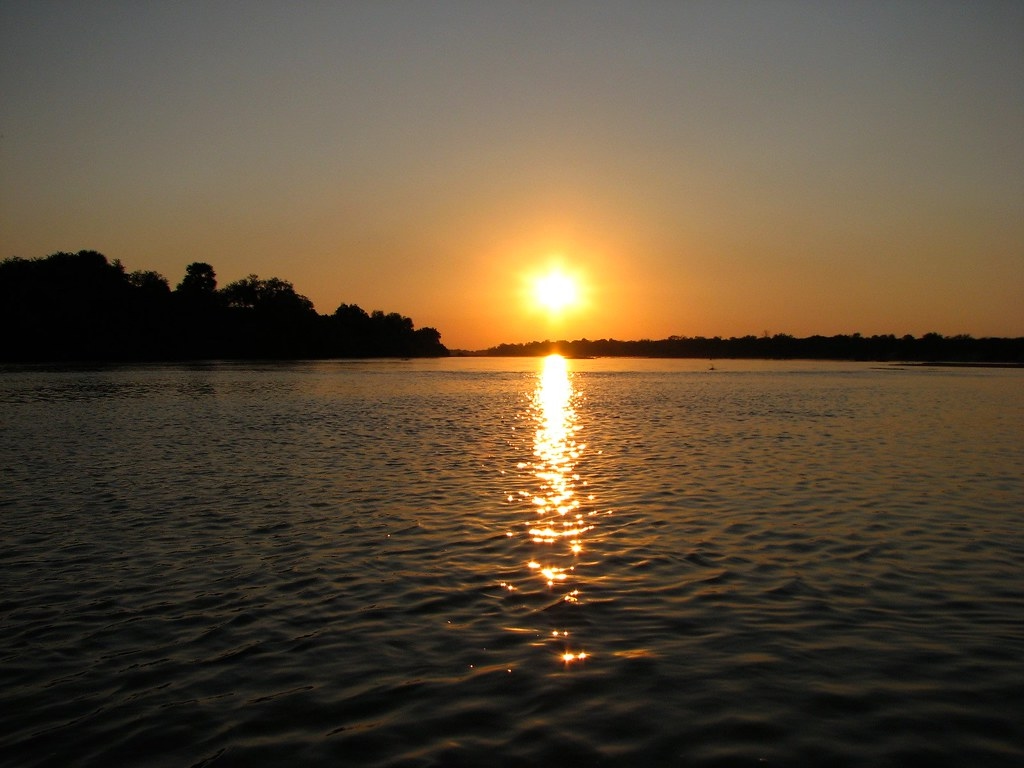
Perhaps the most magical iteration of the boat safari is the late afternoon excursion. As the intense heat of the day dissipates, the light softens, turning the water to liquid gold. The wildlife activity increases as animals come down for their evening drink before the predators begin their night's work.
Your boat guide will often find a quiet spot, cut the engine, and let the boat drift silently with the current. They will produce a cooler box and serve cold gin and tonics or local beers. Sitting on a boat in the middle of an African river, listening to the grunts of hippos and the calls of nightjars, watching the sun set in a blaze of red and orange over the wilderness, is the ultimate safari "sundowner." It is a peaceful, deeply reflective conclusion to a day of exploration, highlighting the incredible diversity and serenity of Tanzania's vital waterways.
An invitation to reconnect with nature in its purest, most undiluted form.
The ways to experience Boat Safaris Experience.
Begin your journey.
Tell us which journey feels closest and we will shape it around you — dates, pace, the kind of camps you sleep best in.