

You are witnessing a living, breathing theater where no two days are ever the same, and no two sightings are ever repeated.
The Serengeti National Park is not merely a destination; it is an emotional experience, an ancient rhythm of life, and the undisputed crown jewel of Tanzania’s Northern Safari Circuit. The name itself is derived from the Maasai word siringet, which poetically and accurately translates to "the place where the land moves on forever." Spanning an astonishing 14,763 square kilometers (5,700 square miles), this vast expanse of savanna, woodland, and riverine forests is arguably the most famous wildlife sanctuary in the world. For travelers seeking the quintessential African safari, the Serengeti represents the absolute pinnacle of wildlife viewing, offering an unparalleled concentration of predators, herbivores, and avian species in an environment that remains largely unchanged since the dawn of humanity.
When you enter the Serengeti, the sheer scale of the landscape is the first thing that strikes you. The horizon seems impossibly distant, marked only by the occasional flat-topped acacia tree or dramatic granite outcrops known as kopjes. These ancient geological formations act as islands of life in a sea of grass, providing shelter, vantage points, and territory for a wide array of wildlife, most notably the park's thriving population of big cats. The profound sense of space and freedom found here is a rare commodity in the modern world, making a journey to the Serengeti a deeply restorative and transformative experience. It is a place where you can disconnect from the noise of civilization and reconnect with the primal forces of nature.

The complete guide to Serengeti National Park Safari.
 I.
I.
The Great Wildebeest Migration: The Greatest Show on Earth
The Great Wildebeest Migration: The Greatest Show on Earth
While the Serengeti is a phenomenal year-round destination, it is most famous for playing host to the Great Wildebeest Migration. This is the largest overland movement of mammals on the planet, a relentless, cyclical journey driven entirely by instinct and the desperate search for fresh grazing and water. Over two million wildebeest, accompanied by hundreds of thousands of plains zebras and Thomson's gazelles, form massive mega-herds that traverse the Serengeti ecosystem in a clockwise direction. Witnessing this epic journey is a bucket-list experience that defies description; the ground literally trembles beneath their hooves, and the air is filled with the cacophony of their constant grunting and braying.
The migration is not a single event, but a continuous cycle with distinct phases. From late January to March, the herds congregate on the mineral-rich short-grass plains of the southern Serengeti and the Ndutu region for the calving season. During a highly synchronized two-to-three-week window, an estimated 500,000 calves are born. This explosion of new life is joyous but perilous, as it attracts the highest concentration of predators eager to take advantage of the vulnerable young. By June and July, the herds push northward into the Western Corridor, facing their first major obstacle at the Grumeti River, where massive Nile crocodiles lie in wait.
The climax of the migration occurs between August and October in the extreme north of the park, along the border with Kenya's Maasai Mara. Here, the herds must cross the treacherous Mara River. These dramatic, panic-stricken river crossings are the stuff of wildlife documentaries: animals hurling themselves into the churning waters, battling strong currents, steep banks, and the jaws of prehistoric reptiles. To witness a crossing in person is to see nature at its most raw and unforgiving.
 II.
II.
The Predator Capital of Africa
The Predator Capital of Africa
Even when the great herds have moved on, the Serengeti remains the premier destination for predator viewing in Africa. The park supports massive populations of resident wildlife, ensuring that there is never a dull moment on a game drive. The central Seronera valley, characterized by its network of rivers and dense acacia woodlands, is particularly famous for its resident big cats.
The African lion is the undisputed king of these plains. The Serengeti is home to approximately 3,000 lions, organized into large, territorial prides. It is incredibly common to see these majestic predators resting in the shade of a tree, playfully interacting with their cubs, or, if you are lucky, coordinating a complex, strategic hunt. The granite kopjes, such as the famous Simba Kopjes and Moru Kopjes, are favored lounging spots, providing the lions with a perfect vantage point to survey their kingdom.
Leopards, the most elusive of the big cats, are also thriving in the Serengeti. The branches of the sausage trees and yellow fever trees lining the Seronera River provide the perfect camouflage for these solitary hunters. With expert guiding, spotting the dangling tail or spotted flank of a leopard resting with its kill high in the branches is a thrilling reality. Furthermore, the short-grass plains of the south and east are prime cheetah territory. These incredibly swift predators rely on the open spaces to accelerate to speeds of up to 112 km/h (70 mph) in pursuit of gazelles, offering a breathtaking display of agility and speed.
You are witnessing a living, breathing theater where no two days are ever the same, and no two sightings are ever repeated.
 III.
III.
A Tapestry of Ecosystems and Biodiversity
A Tapestry of Ecosystems and Biodiversity
While the endless grass plains define the Serengeti in the popular imagination, the park actually encompasses a remarkable diversity of habitats. This ecological variety is what allows the park to support such an incredible array of life.
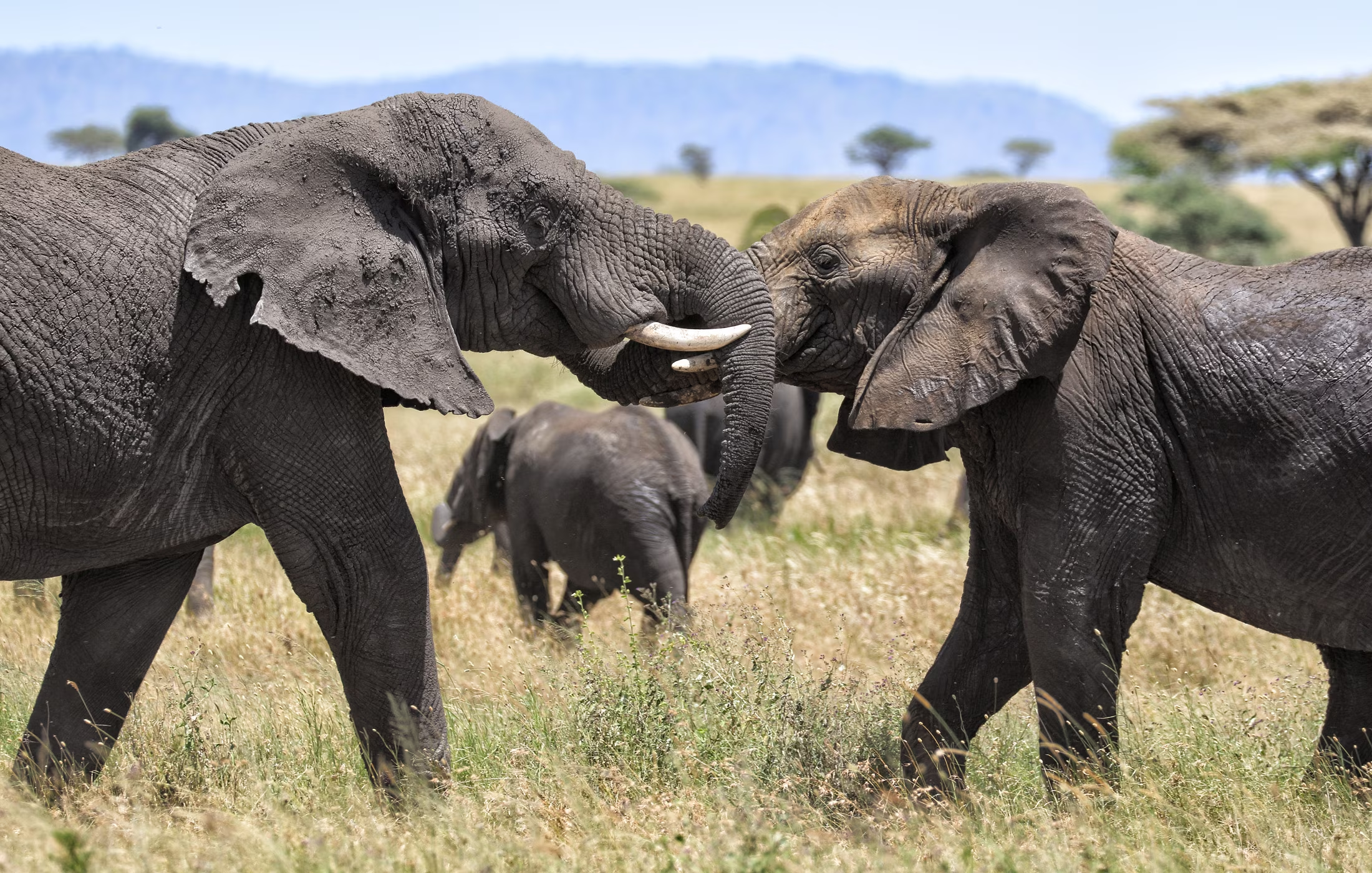
The northern region is characterized by rolling hills and thick bushland, providing a sanctuary for massive herds of elephants and towering giraffes. The western corridor features expansive black cotton soil plains and the Grumeti River ecosystem, home to unique primate species like the black-and-white colobus monkey. The southern plains are almost entirely devoid of trees, dominated by volcanic ash soils that produce highly nutritious grasses during the rainy season.
In addition to the mammalian stars, the Serengeti is an absolute paradise for bird watchers. With over 500 recorded species, the avian life is dazzling. From the massive, flightless ostrich and the bizarre-looking secretary bird stalking the plains, to the vibrant lilac-breasted rollers and the majestic African fish eagles patrolling the waterways, the skies are as alive as the land. The diverse habitats ensure that whether you are an amateur enthusiast or a serious ornithologist, the birding opportunities are endless.
 IV.
IV.
Ethical Safari Practices and Conservation
Ethical Safari Practices and Conservation
Preserving the pristine state of the Serengeti is of paramount importance. When you travel with Ngomi Adventures, you are participating in a safari that prioritizes the welfare of the wildlife and the integrity of the ecosystem. Our guides adhere strictly to park regulations, ensuring that vehicles remain on designated tracks to prevent soil erosion and habitat destruction. We maintain respectful distances from the animals, ensuring that our presence does not cause stress or alter their natural behavior.
The park fees included in your safari are directly channeled into vital conservation efforts. This funding supports the brave park rangers who conduct anti-poaching patrols, the scientists who monitor the health of the ecosystem, and the maintenance of the infrastructure that allows this vast wilderness to be managed effectively. The Serengeti is a UNESCO World Heritage site and an International Biosphere Reserve; its protection is a global priority, and responsible tourism is the primary economic engine that makes this protection possible.
 V.
V.
Crafting Your Serengeti Itinerary
Crafting Your Serengeti Itinerary
Because the Serengeti is so vast and the wildlife distribution changes dramatically throughout the year, careful planning is essential for a successful safari. A generic itinerary will not suffice. At Ngomi Adventures, we tailor your Serengeti experience based on the exact time of year you are traveling and your specific wildlife viewing priorities.
If you are traveling between January and March, we will base your safari in the southern Ndutu region to witness the calving season. If you are aiming for the dramatic river crossings in August or September, we will fly you directly into the northern Kogatende sector. For those seeking year-round, reliable predator action, the central Seronera region is always included.
We also offer a variety of accommodation styles to suit your preferences. For the ultimate immersive experience, we highly recommend staying in a mobile tented camp. These luxurious camps are packed up and moved several times a year to anticipate the movements of the Great Migration, ensuring you are always as close to the action as possible. Alternatively, we partner with stunning permanent lodges built seamlessly into the rocky kopjes, offering panoramic views, swimming pools, and spa services.
The ways to experience Serengeti National Park Safari.
Begin your journey.
Tell us which journey feels closest and we will shape it around you — dates, pace, the kind of camps you sleep best in.