People ask us, regularly, what makes Tanzania different from every other safari destination. The honest answer is that it isn't one thing. It's the accumulation — the wildlife one morning, the way a Maasai elder laughs at something your guide says, the silence after the campfire goes down. Here are the ten things we see travellers talk about most when they come back.
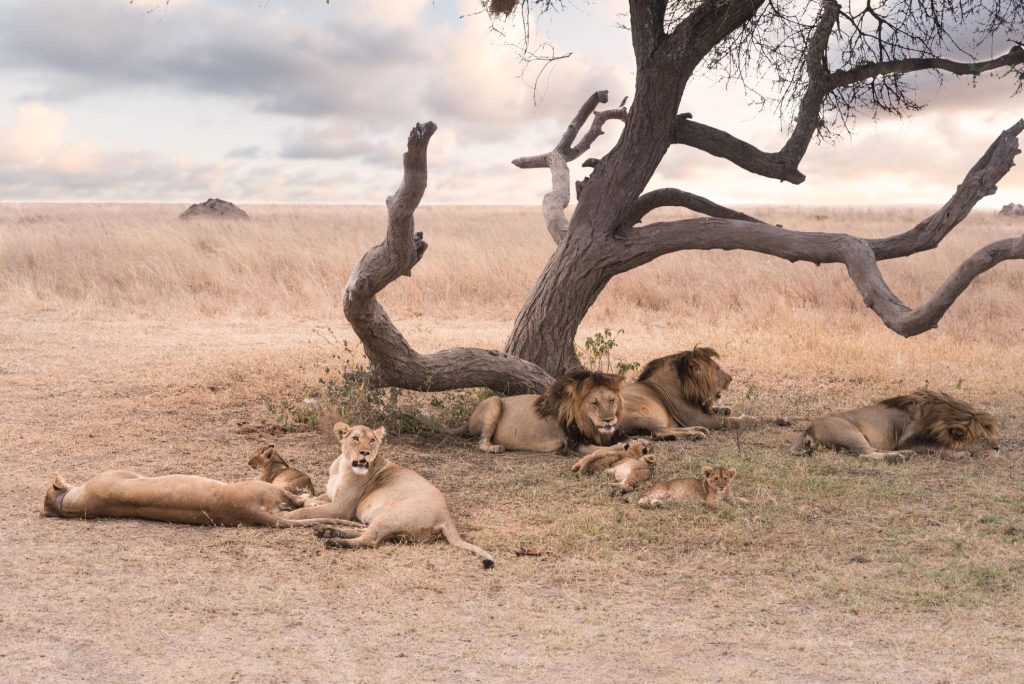
Tanzania's parks hold lions, elephants, leopards, buffalo, rhinos, giraffes, zebras, cheetahs, wild dogs, and several hundred bird species — and unlike some destinations, the animals here are genuinely wild, behaving on their own terms. No game drive is the same twice, which is the point.

There is nowhere else on the planet quite like it. Two and a half million acres of open plain, home to the highest concentration of large mammals anywhere on earth, and the only place where you can witness the Great Migration — roughly two million wildebeest and zebras moving in a continuous circuit across the ecosystem. It is one of the few things in nature that genuinely exceeds whatever you imagined before you got there.
Every guide has a version of this story: a traveller who spent years building up an idea of the Serengeti, arriving, and going completely quiet. Not disappointment. The opposite.
The world's largest intact volcanic caldera, roughly 260 square kilometres of enclosed wilderness where animals are resident year-round. Descending into the crater on a clear morning — the walls rising on all sides, lions already moving through the short grass — is unlike any other game drive experience in Africa. It tends to be a day people talk about for years.

Tanzania is not one place. Baobab-dotted plains in Tarangire, highland forest on the Ngorongoro rim, the flat grassland infinity of the Serengeti, the flamingo-pink shallows of Lake Natron, the forested slopes of Mahale, and the white-sand coast of Zanzibar. Travellers who try to see all of it in one trip never quite manage it, which is exactly why most of them come back.

"Karibu" — welcome — is usually the first Swahili word visitors learn, because they hear it within hours of arriving. Tanzania has one of the most stable and genuinely hospitable reputations of any country in East Africa, and that warmth isn't a performance for tourists. It runs through every interaction: lodge staff, market vendors, village elders, the person who waves from the roadside on a long transfer drive.
Tanzania has over 120 ethnic groups, each with its own language, traditions, music, and history. A Maasai village visit isn't a stage-managed tourist experience — it's an introduction to people who have coexisted with lions and elephants for centuries and have very specific views about what that means. The Hadzabe at Lake Eyasi are among the last hunter-gatherer communities on the continent. These encounters don't translate to photographs. They stay with people differently.
The wildlife is what brings most people. The people and the culture are usually what makes them want to come back.
Tanzania holds Africa's highest mountain, the continent's largest chimpanzee sanctuary, the old Swahili spice port of Stone Town, walking safaris in parks where vehicles aren't permitted, whale shark diving off Mafia Island, and some of the Indian Ocean's quietest reefs. It is possible to spend two weeks here and never get in a safari vehicle. Most people do both, which is probably the right answer.

Tanzania is one of those places where the sky does things that make photographers put down their cameras and just watch. The pre-dawn blue over the Serengeti before anything moves. The way the late-afternoon sun catches the dust behind a herd. The sunset behind a line of acacias that lasts long enough that nobody says anything for a while. These moments are not in any itinerary, but they end up in almost every story people tell when they get home.

Tanzania works for budget travellers on joining safaris and honeymooners in private crater lodges. For families with young children and solo travellers who want to share a vehicle with strangers who become friends by day three. For photographers who need two hours at a single sighting and for people who just want to sit in the bush and not think about anything. The country is large enough and varied enough that the right trip exists for almost anyone — the work is in building it correctly.
This one is harder to explain. People come back from Tanzania and find that the photographs, good as they are, don't quite capture it. The sound of lions at three in the morning. The way a herd of elephants moves as one animal. The campfire conversation that went on long after dinner was finished. These things don't compress into a frame. They sit somewhere else, and they tend to surface at unexpected moments for a long time after. That's usually why people book a second trip.
Before You Come
Yes. Tanzania is one of the most politically stable countries in East Africa, with a long track record of safe tourism. Inside the parks and lodges you are completely secure. In Arusha and Dar es Salaam, normal urban precautions apply — use hotel safes, don't display expensive equipment in markets — but neither city is hostile to visitors. Your guide and lodge team are the best source of practical advice once you arrive.
No. Tanzania receives first-time Africa visitors and seasoned travellers in equal measure, and the infrastructure for tourism is well developed across the Northern Circuit. The itinerary determines the level of roughness — a budget camping safari is a different physical experience from a luxury lodge trip, but neither requires any special preparation beyond the usual vaccinations and common sense packing.
For peak season travel — July through October, when the migration crossings are happening — nine to twelve months in advance is realistic for the better camps, which fill early. For green season or shoulder-period travel, three to six months is usually sufficient. The earlier you book the more flexibility you have on lodge choice; leaving it late means working with what's left.
A short note to us is enough — when you want to travel, who's coming, and roughly what kind of experience you're after. We'll read it, think for a day, and come back with questions rather than a quote. The real planning starts in that first conversation. You can reach us at info@ngomiadventures.com or via WhatsApp, and we reply within two working days.
Ready to See It for Yourself?
Every Ngomi journey is built around the traveller making it. Tell us when you want to come and who's coming with you — we'll take it from there.
Write to us at info@ngomiadventures.com or WhatsApp. We're based in Arusha and reply within two working days.
The Ngomi Letter
Seasonal notes, quiet stories, and the occasional open vehicle seat — straight from our team in Arusha.